
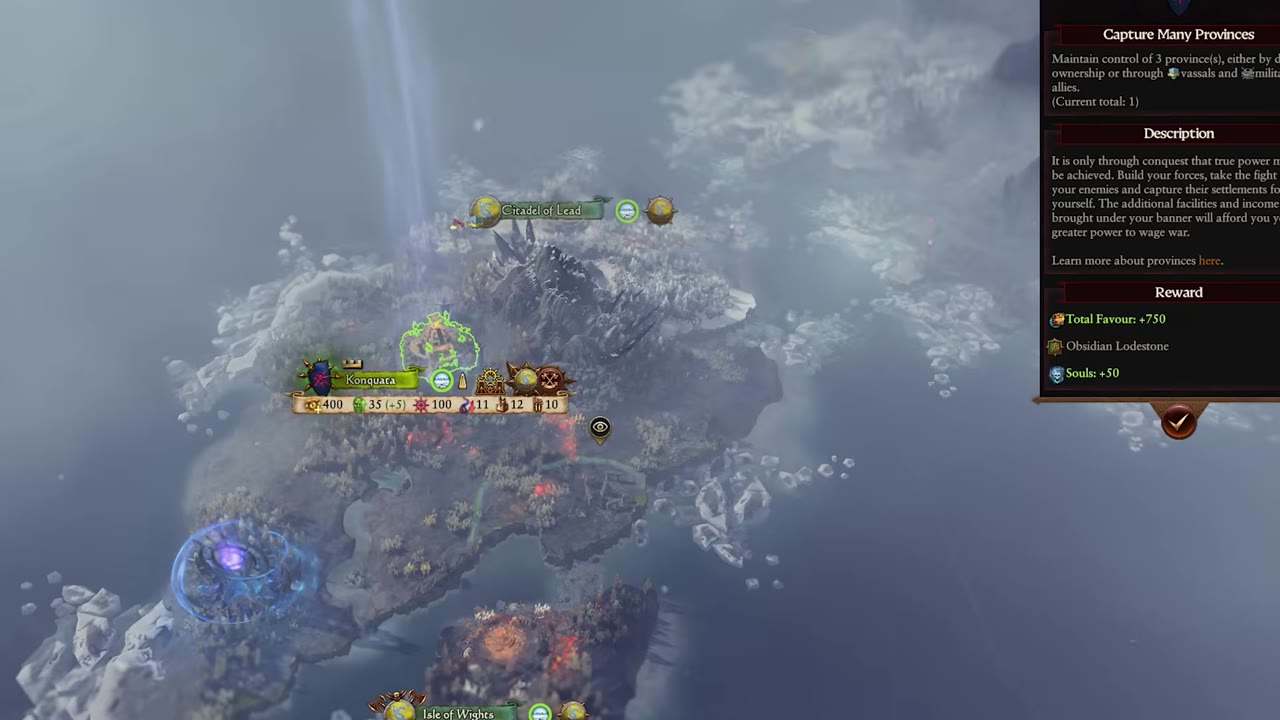
Players who master corruption in Total War: Warhammer 3 can influence control, cause attrition, destabilize enemy regions, and ensure their own armies thrive. This guide explains how the main corruption types work, how to spread or remove them efficiently, when their effects trigger, and how to take advantage of them.
Quick answer
| What | Answer |
|---|---|
| Corruption thresholds | 25, 50, and 75 |
| Corruption types | 6 |
| Spread sources | buildings, commandments, characters, skills, items, followers, heroes, and events |
| Great Game trigger | most corruption on the map every few turns |
| Cleaning corruption | reduce all corruption types in the region |
| Best border defense | buildings and commandments |
- Corruption types may show as 6 or 7. Sources differ: the main six are the four Chaos types, Vampiric, and Skaven. Untainted only appears as the absence of corruption. Check the current game build for definitive types.
Understand what corruption does on the campaign map
Corruption changes how every region behaves, affecting control, public order, army attrition, and event risk. The primary corruption types are Khorne, Nurgle, Slaanesh, Tzeentch, Vampiric, and Skaven; untarnished land has "untainted," which means no active corruption type. While some sources list seven types, only six produce their own unique effects — untainted simply means there is no corruption present.
Corruption's effects activate when the local value passes three thresholds: 25, 50, and 75. The higher the corruption level, the stronger and more aggressive the effects become. Significant changes occur at 50: if any single corruption surpasses that value in a region, other types of corruption are actively suppressed, making it much harder for multiple corruption types to coexist in the same area.
Above 50, corruption begins to inflict penalties (like attrition) on armies not aligned to or protected from that type. For Chaos factions, high local corruption is usually beneficial, but for non-Chaos rulers it brings negative effects and makes sustaining control difficult.

Learn what each corruption type changes
Each corruption type brings its own benefits for aligned factions and drawbacks for others. This table summarizes what changes in regions where one corruption is dominant.
| Corruption Type | Bonuses for Aligned Factions | Penalties for Non-Aligned Factions |
|---|---|---|
| Chaos Chaos Undivided | +Control for Chaos, -Control and attrition for non-Chaos 0:58 | Control loss, attrition above 50, reduced other corruptions |
| Vampiric | +Control, higher chance for destroyed units to revive after battle, more HP on revived units | Control loss, attrition above 50 |
| Skaven | -Control (for Skaven), lower siege attrition, +Income (buildings), more Men Below in battles | More control loss for non-Skaven |
| Khorne | +Control, +Melee Attack, +Charge Bonus, +Vigor loss resistance for Khorne units | Control loss, attrition above 50 |
| Nurgle | +Control, +Growth, longer plague duration, higher plague spread chance | Control loss, attrition above 50 |
| Slaanesh | +Control, +Income, higher seduction budget | Control loss, reduced income, attrition above 50 |
| Tzeentch | +Control, increased Winds of Magic gain, more ammo for Tzeentch demons | Control loss, miscast chance up, Wind gain chance down, attrition above 50 |
| Untainted | No direct bonus; serves to suppress all other corruption types | All corruption types are reduced |
- For most non-Chaos factions, exposure to Chaos-aligned corruption brings substantial drawbacks, with attrition and control loss being the primary issues.
- For Skaven, their own corruption reduces control but brings other economic or strategic bonuses.
- Above 50% corruption, the non-dominant corruptions are actively suppressed, locking in one type at a time.

Spread your faction's corruption efficiently
Increasing your favored corruption type (or cleaning up enemy corruption) relies on a few major sources. Follow this sequence to ensure your corruption spreads quickly in the regions where you want it.
- Regional or adjacent corruption rises quickly when built up.
- Most commandments can nudge local and sometimes neighboring region values.
- By default, lords and heroes generate their own flavor of corruption wherever they go.
- Characters usually have skill lines specifically for increasing their corruption pressure.
- This method is less predictable as it depends on what loot and follower drops you get.
- Certain hero actions or campaign events can start or worsen specific corruption types.

Use corruption to hold your own territory
Ensuring your own regions' corruption matches your faction prevents attrition, strengthens defenses, and secures income. Regions will typically move toward your favored corruption just by being occupied and managed by your faction, but active tools make this faster and safer.
Buildings and commandments are the most reliable ways to maintain high levels of your "home" corruption, especially deep within your territory. They provide passive pressure, so corruption trends in your favor even while your armies are away campaigning.
Border regions are the most at risk from enemy corruption spillover; for these, investing in extra buildings or commandments focused on corruption is wise. High internal corruption also supports your armies with buffs and protects against debuffs from enemy actions or incursions. Because armies mostly fight on the front or in enemy lands, static, reliable corruption sources are what keep your provinces safe in the long run.
Push corruption into enemy territory
Destabilizing enemy regions is easiest when you focus on corruption sources that travel or target enemy provinces. Use this sequence to project your influence before and after you capture new territory.
- Even one character focused on spreading your faction's corruption can rapidly shift the region's value in your favor.
- Not every skillpoint must go into corruption, but having at least one specialist for each campaign front pays dividends.
- This not only solidifies your corruption effect but actively reduces all other types at the same time, hastening the undermining of control.
- Target cities and armies focused on spreading their own corruption for the fastest cleanup.
- A few quick upgrades can lock in your control and clear any lingering resistance faster.

Know what rebellions and anti-corruption factions change
The dominant corruption in a region dictates what type of rebellion you will face. For example, high Tzeentch corruption leads to Tzeentch-aligned rebel stacks, while Skaven corruption spawns Skaven uprisings.
Factions built around untarnished land (untained) are especially effective at suppressing any corruption, making them natural counters to Chaos, Undead, or Skaven spreads. If a region is captured or held by these factions, they rapidly decrease all types of corruption present.
For Chaos factions, the "Great Game" mechanic tracks which Chaos corruption (Khorne, Nurgle, Slaanesh, Tzeentch) is most widespread. Every few turns, the dominant corruption gains enhanced Unholy Manifestations for that faction. This gives an additional incentive for Chaos players to maintain and spread their own corruption as widely as possible.

Screenshot-worthy map states to show the mechanic
- A campaign map region panel highlights the specific breakpoints where corruption effects change.
- Buildings or the province management panel display where and how corruption can be spread or suppressed, especially for defensive setups.
- The hero or lord skill panel shows what traits and abilities directly increase (or decrease) local corruption values.
- A border region with multiple corruption sources visible illustrates the tug-of-war between rival factions and the impact on control and attrition risk.
- Screenshots of rebel risk overlays and tooltip popups demonstrate how the dominant corruption determines what kind of uprisings can occur, as well as which factions can clean up effectively.
Also worth knowing
- Wood Elf corruption from awakened forests can cause attrition. This is a separate corruption-like effect and can impact any armies passing through, not just those facing typical Chaos, Vampiric, or Skaven corruption.
- Vampiric corruption must be spread actively for Vampire Counts. If it drops too low in occupied territory, even Vampire armies can take fatal attrition.
- Chaos Chaos Undivided corruption works differently for Chaos Dwarfs. Instead of rewarding control, it provides less control but higher replenishment for this faction.
- Attrition above 50 corruption only affects non-Chaos factions. If you are aligned with the dominant corruption, you are safe; others risk losing troops passively.
- Long exposure to hostile corruption can give lords negative traits. To remove these, cycle your lords through uncorrupted regions.
- Warbands (Warriors of Chaos) can recruit more and varied units as local corruption rises.
- Slaanesh corruption boosts seductive influence against humans and elves. This allows for easier domination and manipulation of these races in heavily corrupted areas.
- Skaven corruption is a double-edged sword for Skaven. At lower levels, it gives more control and food; at higher levels, it reduces control but grants greater income.
Frequently asked
What causes corruption to spread in a region?
Buildings can add corruption to their own region and sometimes adjacent regions. Commandments can also provide a corruption effect, and characters spread their corruption by default while moving around. Skills, items, followers, heroes, and event choices can add more spread on top of that.
What happens at high corruption levels?
The key thresholds are 25, 50, and 75 corruption, and the effects get stronger at each step. Once a region passes 50 corruption, other corruption types start being reduced, which makes it harder to build up a second type without removing the first.
How do you remove corruption fastest?
Use the same kinds of spread sources, but in reverse: reduce the corruption type you want gone and lower all corruption in the region. Target the settlements or armies that are producing the most corruption first so the area clears faster.
Does corruption matter for rebellions?
Yes. The main corruption type in an area determines the kind of rebellion that can appear there. That makes corruption useful not just for pressure and control, but also for shaping what kind of trouble a region will face.
Read next
Total War: Warhammer 3 Settlement Building Guide: Growth vs Income and Build Order
This guide explains how settlement stats, building priorities, and province layout work together in Total War: Warhammer 3. It is for players who want a practical way to develop provinces without wasting slots or slowing their campaign.
Total War: Warhammer 3 Hero-Only Campaign: How Far Heroes Alone Can Carry You
Plan a hero-only campaign around factions that can grow hero capacity quickly, with Skaven and Throt as the core example. The sections focus on early survival, hero recruitment, settlement expansion, and when the strategy starts to fall apart.
Total War: Warhammer 3 Ambush Guide: Why Your Ambushes Fail and How to Fix It
This plan covers how ambush stance works on the campaign map, how terrain and faction bonuses change success chance, and how to set up safer ambushes. It is for players who want to catch armies, split up stacks, or escape bad fights more reliably.
Total War: Warhammer 3 Siege Guide 2026: How to Attack and Defend Settlements
This guide covers a fast settlement-siege tactic built around drawing defenders away from the victory point and capturing it with a small mobile force. It is for players who want to end sieges quickly, especially when autoresolve or prolonged assaults are undesirable.