
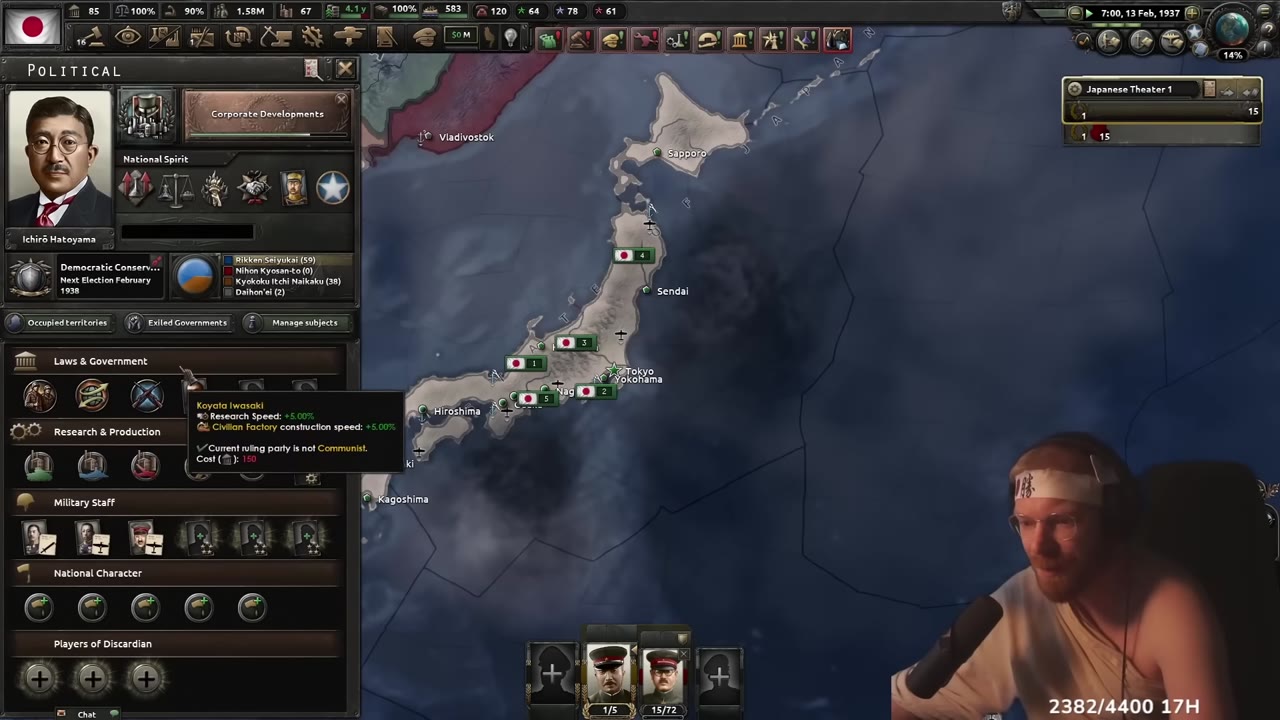
Good logistics, strong air support, and division design that matches the supply line are what decide victory in Hearts of Iron IV. Prioritize economy and supply before planning deep offensives, and keep your army effective in harsh terrain. Supply is the single most important factor—your front collapses if the logistics line breaks, so build your strategy around keeping it secure.
Quick answer
| What | Answer |
|---|---|
| Main takeaway | Supply is everything |
| Early focus | civilian building |
| Best battlefield support | close air support |
| Key bottleneck | Wuhan supply hub |
| Template direction | soft attack marine tanks |
| Notable air bonus | 50% more cast damage |
Start with supply, not with battle plans
Prioritize your civil economy and logistics in the opening phase instead of rushing straight into battle plans or military expansion. A strong foundation of civilian factories allows you to outproduce and outlast opponents when the war begins. Efficient supply lines keep your troops moving and prevent attrition, especially in campaigns over difficult terrain or long fronts.
- Boost factory construction speed and research to lay groundwork for sustained war effort 2:45
- Commit political power and resources to economy before rushing military upgrades 3:24
- Peace and strong logistics precede offensive planning for reliable military power 4:22

Build an army that fits the logistics line
Design divisions for soft attack and flexibility—especially tank and marine combinations—so they remain effective when supply is limited. Amphibious tanks and marine templates are prioritized for campaigns where terrain and supply are bottlenecks, like island operations or China. Keep divisions at a manageable 20 width: this size provides enough strength to hold key positions without overextending your supply network.
A force built for soft attack is still strong when logistics are stretched, since it relies less on heavy equipment and high upkeep. Rather than using meta armor stacks that collapse under attrition, marine-tank units supported by good air deliver reliable performance where the supply line is fragile.

Use air power to break stalled fronts
Air power, especially close air support (CAS), is a force multiplier in supply-limited wars. Air units provide critical damage against dense enemy infantry, let you win battles even when ground progress stalls, and reduce the burden on your supply lines. Carrier planes are researched for their production bonuses, allowing fast expansion of air capacity where needed (7:44).
A notable advisor bonus boosts CAS damage by 50%—making air strikes disproportionately effective. When supply or terrain slow your offensive, air support lets you inflict losses on equipment and organization faster than the enemy can recover. This edge is especially important in wars against armies like China, which rely on massed infantry.

Take supply hubs before pushing deeper
Controlling supply hubs is the most important step before expanding your front or chasing deep encirclements. Without secure hubs like Wuhan, your army will stall and attrition will ruin combat power (12:34). Advance methodically—do not bypass supply nodes or stretch logistics too thin.
- Make hub control the main offensive goal 12:34
- Wait before pushing into new territory if supply lines are still vulnerable 14:28
- Offensive power fades quickly when supply shrinks—fall back or consolidate if required 15:55
- Attack where the enemy cannot maintain equipment or supply 16:25

Win long wars by trading space for time
In protracted wars, especially against China, your enemy may have a larger army but weaker technology and industry. Focus your attacks around supply lines and retreat or reposition if the terrain is too harsh or supply penalties are stacking up. Equipment shortages eventually cripple poorly supplied armies—keep pressure on exposed enemy units until their fighting power drops (14:28).
Trading space for time lets you survive and recover, even against strong opponents. Move toward better terrain or supply hubs instead of chasing deep advances—your offensive stays alive because your line is managed around logistics. Encirclements succeed when you isolate enemy units from supply, not merely by outnumbering them.


Set up allies and puppets to feed your economy
Strategically inviting allies and making trade deals unlock logistics advantages. Bringing countries like Indonesia into your faction provides new routes for resources and trade, supporting your war production. Negotiate for steel with Manchuria to increase arms output and utilize puppet arrangements to boost your building options.
- Indonesia and others add resources and support—rename faction for clarity 5:19
- Secure steel with Manchuria for army and navy production 6:46
- Distinguish your group (e.g., Nirvana) and set up puppet/trade options for logistics 5:19

Finish with a supply-first mindset
The core strategic lesson from this campaign is to focus on logistics, industry, and peace—the outcome of your war depends most on supply. Every major decision folds back into keeping your supply lines strong and your front equipped. Industrial bases, trade, faction setup, and division design all serve the same goal: maximize supply so your armies do not stall, collapse, or lose to attrition.

Remember: every unit, every plan, every offensive works only if your supply network keeps up. Supplies everything.
Also worth knowing
- The campaign is built around supply and logistics — every strategic move, division choice, and front push starts from securing logistics first.
- Roleplay adds flavor but does not change the supply mechanics — the alternate-universe Buddhist Japan setting is for amusement, but the gameplay lessons apply in any HOI4 run.
- The ending uses a surrender-message joke — final commentary is styled as a historical surrender, underlining the supply theme.
- China roleplay is memorable, but supply wins the war — despite China’s army size, the lack of logistics and equipment decides the outcome, not political flavor or roleplay.
Frequently asked
What matters most in HOI4 combat: supply or division stats?
Supply matters first because units without enough supply lose combat power, move worse, and cannot sustain long offensives. Good stats still matter, but strong divisions fail quickly when the logistics line breaks. The safest rule is to treat supply as the limit and division design as the way to use what supply you have.
How do you push in China without stalling out?
Keep pressure on the enemy where supply is still healthy, then take the nearest hub before advancing deeper. Air support helps you win fights even when the front is crowded, but the advance slows hard once the supply network thins out. The main mistake is chasing deep encirclements before the hub line is secure.
Why do close air support and supply work so well together?
Close air support can win battles even when the ground front is messy, so it compensates for awkward terrain and poor enemy positioning. Supply keeps your own units fighting long enough for the air damage to matter. When both are strong, the enemy starts losing equipment and organization faster than they can recover.
What kind of division was being built here?
The build centered on soft attack, amphibious tanks, and marine-style forces supported by green air and a strong navy. The emphasis was not on a classic meta armor stack but on units that could fight effectively while still fitting the logistical plan. That makes the army strong in island and river-heavy wars where supply is tight.
Read next
HOI4 Production Efficiency Guide
Why two countries with the same factories produce different amounts of equipment in Hearts of Iron IV: how production efficiency builds on a running line, what retention keeps when you switch, when conversion beats replacement, and the habit that quietly costs the most output.
HOI4 Resistance and Compliance Guide
How occupied territory actually works in Hearts of Iron IV: what resistance costs you, what compliance gives back, how occupation laws set both at once, and what garrisons draw from your stockpile. Includes the values the game uses at capture and the trade a harsher law makes.
HOI4 MIO Guide 2026
This plan covers how to choose Military Industrial Organization perks by equipment type, with priorities for production, combat stats, and policies. It is aimed at players who want a practical way to pick strong perks without memorizing every tree.
HOI4 China Guide
What China starts with in Hearts of Iron IV, what its national spirits cost it, where the focus tree leads, and the openings the wiki's own editors recommend. Written for a nation with almost no video coverage, from the game's reference wiki.